B2 & C1 English Speaking Exam

Know your speaking level
before the exam.

Practise all four parts, record yourself, and get an instant estimated CEFR speaking level with concrete feedback — no examiner needed.

PART 01
Interview
~2 min
PART 02
Long Turn
~1 min
PART 03
Collaboration
~3 min
PART 04
Discussion
~5 min

Estimated levels are a practice diagnostic, not an official result. Not affiliated with or endorsed by Cambridge Assessment English.

scroll to explore
Practice parts
4
interview to discussion
Time to a result
<1'
with instant evaluation
Criteria scored
4
each rated 0–5
Level range
B1–C2
estimated CEFR band
Part 1 · Interview

The Interview

A short conversation about yourself — your life, interests, opinions and experiences.

Duration
~2 min
Answer questions in turn
Format
Q&A
Spoken questions — no visuals
What a strong answer shows
🗣️
Natural fluency — speak smoothly without long pauses or rehearsed-sounding answers.
📚
Vocabulary range — avoid repeating basic words. Use varied, precise vocabulary.
🔗
Extended answers — never give one-word answers. Develop points with reasons and examples.
😊
Personality — be genuine. It's not what you say, but how you say it.
Do this
Give extended answers (3–5 sentences minimum)
Use connectors: In addition, What's more, Having said that…
Give reasons and examples: "mainly because…", "for instance…"
Ask for clarification politely if needed
Speak at a natural, measured pace
Avoid this
Yes / No answers without any development
Memorised, scripted-sounding speeches
Speaking too fast due to nerves
Filling silences with "um", "uh" excessively
Switching to your native language
Practice questions — tap any category to expand
Aim for 60–90 seconds per answer. Record yourself and listen back.
Personal life & background +

Classic opening questions — be ready to talk about where you're from, your studies and your daily life.

Where are you from, and how has living there shaped who you are?
Tell us about something you're particularly proud of achieving.
How has your approach to learning English changed over the years?
What kinds of things do you enjoy spending your free time on?
Describe a typical day in your life at the moment.
Tell me about a person in your life who has influenced you greatly.
Opinions & current topics +

Give opinions with reasons, not just facts.

Do you think social media has had a positive or negative impact on young people?
How important do you think it is to travel abroad? Why?
What role do you think technology should play in education?
Do you think young people today have more opportunities than previous generations?
Do you think it is better to live in a city or in the countryside? Why?
What do you think is the most important quality a person can have?
Future plans & ambitions +

Use a variety of future forms and show ambition.

What would you like to do after you finish your current studies?
Do you have a career in mind, or are you still exploring your options?
Where do you see yourself in ten years' time?
Would you consider working or studying abroad? What would be the advantages?
What's the most important thing you hope to achieve in the next few years?
Hobbies, interests & culture +

Connect your hobbies to wider themes (identity, society, wellbeing).

Is there a hobby or interest you've recently taken up? What drew you to it?
What kind of music, films or books do you find most interesting, and why?
Do you think it's important to keep traditional cultural activities alive? Why?
How important is art and creativity in your daily life?
Do you prefer spending time with a large group of people or a few close friends?
Study, work & learning +

Show self-awareness and the ability to reflect.

How do you feel about the amount of pressure students face nowadays?
What do you think is the most effective way for you to learn something new?
Have you ever had a part-time job? What did you learn from the experience?
Do you prefer working on your own or as part of a team? Why?
What do you think makes a truly good teacher?
Model answer structure — use this every time
1
Direct answer — state your view clearly in the first sentence.
2
Reason"This is mainly because…", "I feel this way because…"
3
Example"For instance, in my own experience…"
4
Broader point or contrast"Having said that…", "On the other hand…"
Useful phrases for Part 1
As far as I'm concerned…In my experience…What I find particularly interesting is…To be honest with you…I'd say that…It depends on the situation, but generally…I'm quite passionate about…This is mainly because…Having said that…From my own experience…On reflection, I think…I feel quite strongly that…
Part 2 · Long Turn

The Long Turn

You get 3 photographs. You choose 2, compare them and answer a specific question. Then a partner briefly reacts.

Your turn
1 min
Talk about 2 of the 3 photos uninterrupted
Partner's reaction
30 sec
Partner answers a related question
Strategy for Part 2
🖼️
Don't just describe — compare, contrast and speculate: "In contrast to…", "Whereas in this photo…", "This could suggest that…"
Answer the question — there's always a specific question. Address it directly.
⏱️
Time yourself — speak ~25 seconds per photo, then answer the question.
🔍
Speculate confidently — "It looks as though…", "I would imagine that…"
Task 1 — Forms of communication

Face to face
Video call
Compare two of the photos and say why people might prefer these methods of communication in different situations.
Your turn: 1 minute  |  Partner reacts: 30 seconds
Task 2 — Learning environments

Lecture hall
Group study
Compare the photos and say what the advantages and disadvantages of each learning environment might be.
Your turn: 1 minute  |  Partner reacts: 30 seconds
Task 3 — People at work

Office meeting
Working alone
Compare the photos and say what the challenges and benefits of each working style might be.
Your turn: 1 minute  |  Partner reacts: 30 seconds
Task 4 — Travel & transport

Airplane
Train
Compare the photos and say what factors people might consider when choosing between these forms of transport.
Your turn: 1 minute  |  Partner reacts: 30 seconds
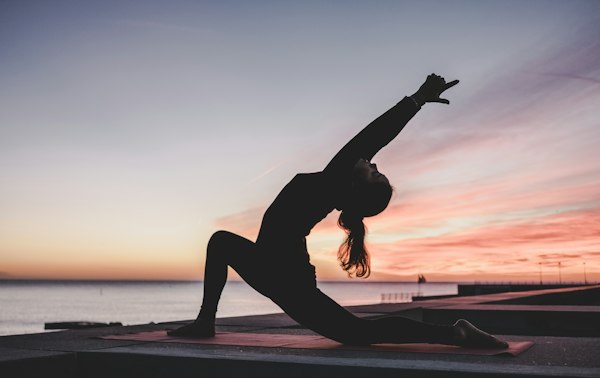
Task 5 — Health & wellbeing
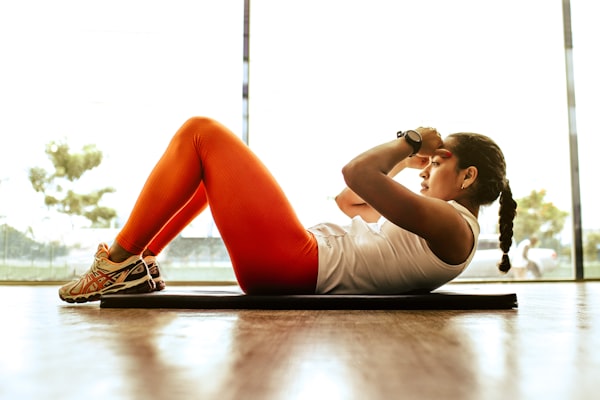
Gym
Yoga
Compare the photos and say why people might prefer one approach to physical health over the other.
Your turn: 1 minute  |  Partner reacts: 30 seconds
Comparison & speculation phrases
In contrast to the first photo…Both images show…Whereas in this picture…It looks as though…I would imagine that…This could suggest that…The main difference between…What strikes me about…This seems to be taking place…
Part 3 · Collaborative Task

The Collaborative Task

You and a partner discuss written prompts together — a 2-minute discussion, then a 1-minute decision.

Discussion phase
2 min
Discuss all the written stimuli
Decision phase
1 min
Reach a decision together
Strategy for Part 3
🤝
Interact genuinely — invite your partner, build on their ideas, agree and politely disagree.
⚖️
Cover all stimuli — keep the pace moving to cover everything in 2 minutes.
🎯
Make a real decision — reach a conclusion, or explain why you couldn't agree.
🧩
Read the task card — use your planning time to decide what to say.
Task 1 — Technology in everyday life
How has technology changed the way we communicate?
📱 Social media
💬 Instant messaging
📹 Video calls
🤖 AI assistants
🌍 Remote working
Decision: Which has had the most significant impact on how people communicate today?
Discussion: 2 minutes  |  Decision: 1 minute
Task 2 — Environmental challenges
What can individuals do to reduce their environmental impact?
🚗 Use public transport
🥗 Eat less meat
♻️ Recycle more
💡 Use renewable energy
✈️ Travel less by air
Decision: Which action is most realistic for most people in their daily lives?
Discussion: 2 minutes  |  Decision: 1 minute
Task 3 — The future of work
What will the workplace look like in 20 years?
🤖 AI replacing jobs
🏠 Permanent remote work
⏰ 4-day working week
🌍 Global digital nomads
🤝 Human–robot collaboration
Decision: Which change will have the greatest impact on people's working lives?
Discussion: 2 minutes  |  Decision: 1 minute
Task 4 — Education in the 21st century
How should schools prepare students for the future?
💻 Teach coding & AI literacy
🎨 Focus on creativity
🧠 Develop critical thinking
🌐 Emphasise global languages
💪 Build emotional resilience
Decision: Which skill is most essential for young people entering the world in 2040?
Discussion: 2 minutes  |  Decision: 1 minute
Task 5 — Health & wellbeing
What is the biggest threat to people's health in modern society?
📱 Screen addiction
🍔 Ultra-processed food
😰 Chronic stress
🚶 Sedentary lifestyles
🏙️ Air pollution
Decision: Which threat is hardest for individuals to protect themselves against?
Discussion: 2 minutes  |  Decision: 1 minute
Collaboration & negotiation phrases
What's your take on…?I'd be inclined to say…Do you think that…?I see your point, however…Building on what you said…Shall we move on to…?I think we'd agree that…On balance, I'd say…We seem to be in agreement that…
Part 4 · Discussion

The Discussion

Broader questions related to the themes of Part 3. You discuss, agree, and debate.

Duration
~5 min
Three-way discussion
Depth
Advanced
Opinions, justifications, hypotheticals
Strategy for Part 4
💡
Give opinions with depth — justify with reasons, examples, and hypotheticals: "If we consider…"
🌐
Engage with broader ideas — reference wider society, trends, or global issues.
↔️
Respond to your partner — "As you mentioned…", "I'd like to add to that…"
🔥
Disagree confidently — "I'm not entirely convinced by that…", "I'd challenge that assumption…"
Sample questions — Technology +
  • Do you think society has become too dependent on technology? Why / why not?
  • Some argue that technology isolates us rather than connecting us. Do you agree?
  • How might communication change in the next twenty years?
  • Should access to the internet be considered a basic human right?
Sample questions — Environment +
  • To what extent are individuals responsible for solving environmental problems?
  • Is environmental education effective in changing people's behaviour?
  • Should governments impose stricter environmental laws? Do you agree?
  • How might climate change affect future generations in unexpected ways?
Sample questions — Society & education +
  • How has the purpose of education changed in the 21st century?
  • Is it fair that some people have more opportunities based on where they were born?
  • Are young people today more or less resilient than previous generations?
  • What qualities are most valuable in a leader?
Do this
Give your opinion AND back it up with reasoning
Use hypothetical language: "Were that to happen…"
Reference what your partner said
Use advanced markers: "Nevertheless…", "Regardless of…"
Show range: conditionals, passives, perfect tenses
Avoid this
Repeating exactly what you said in Part 3
Very short, undeveloped answers
Always agreeing — it's ok to debate
Going off topic with unrelated stories
Basic vocabulary you'd use at B1 level
Advanced opinion & discussion phrases
I'm firmly of the opinion that…There's a strong case to be made for…I'd challenge that assumption by saying…Taking a broader perspective…It's a contentious issue, but…To play devil's advocate…The evidence would suggest…Were that to be the case…I'm not entirely convinced that…

How speaking is scored

The public band descriptors used for speaking assessment. Know exactly what is expected at each level — these are the same criteria the instant evaluation applies.

✍️Grammar & Vocabulary
Band531
Descriptor Wide range; sophisticated vocabulary & grammar; rare errors Adequate for familiar topics; errors present but usually communicates Very limited; errors cause misunderstanding
🗣️Discourse Management
Band531
Descriptor Coherent extended contributions; flexible cohesion; minimal hesitation Adequate organisation; noticeable hesitation or repetition Minimal extended speech; very disjointed
🔊Pronunciation
Band531
Descriptor Easy to understand; effective stress & intonation; accent does not impede Understandable; listener needs some effort Frequently difficult to understand
🤝Interactive Communication
Band531
Descriptor Initiates & responds; skilfully maintains interaction; negotiates effectively Adequate; occasionally needs prompting; limited initiation Minimal interaction; unable to sustain
Each criterion is rated 0–5. B2 sits around the middle of the CEFR speaking range in this tool's estimate.
✍️Grammar & Vocabulary
Band531
Descriptor Sophisticated grammar & vocabulary; precise; idiomatic; minimal non-impeding errors Adequate range; errors present but usually communicates Very limited; errors cause misunderstanding
🗣️Discourse Management
Band531
Descriptor Well-organised; sophisticated cohesion; fluent; near-native pace Some organisation; adequate cohesion; occasional hesitation Minimal sustained speech; very disjointed
🔊Pronunciation
Band531
Descriptor Consistently clear; natural stress/intonation; accent does not impede Intelligible; some features affect clarity; listener copes Frequently unclear
🤝Interactive Communication
Band531
Descriptor Highly effective; sophisticated turn-taking; builds on partner naturally Adequate; some prompting needed; limited building on partner Unable to sustain interaction
Each criterion is rated 0–5. C1 sits near the top of this tool's estimated CEFR range.
Solo Practice Studio

Practise by yourself, on the clock.

Pick a part or the full simulation. The page gives you the task, controls the timing, and records your microphone. When you finish, send the recording straight to the evaluator.

PART 1 · INTERVIEW
2:00
Talk about yourself, your interests and your experiences.
Answer the questions naturally. Develop your answers with reasons, examples and brief personal detail. Aim for extended, fluent responses.
Microphone is used only while you are recording.
Language to aim for — reach for these to score C1

Weaving a range of these structures into your answer is what lifts Grammar & Vocabulary and Discourse Management toward the top band. Don't recite them — use the ones that fit.

Your recording is ready

Send it straight to the evaluator for an instant level, or download a copy.

Get my level
Your estimated speaking level
Two ways to get a scored report on the four criteria plus an estimated CEFR level. Choose instant, or do it yourself for free.
Instant Pro
One click. Your recording is scored automatically and the report appears right here — no downloads, no copy-paste.
Manual Free
Copy a prompt, run it in your own free AI, paste the result back, and this page renders the same report.
No recording yet — record in Practice, or upload an audio file.
Transcribing and scoring your recording…
1
Copy the prompt — it's tuned to the part you selected and asks the AI to answer in a fixed format this page can read.
2
Run it in a free AI — open Gemini, attach your audio file (the ⊕/paperclip), paste the prompt, and send.
Open Gemini ↗
Gemini's free tier accepts audio up to about 10 minutes (MP3, M4A, WAV). No audio file? Type out what you said and paste that instead.
3
Paste the AI's reply here — paste the whole thing. This page finds the result and builds your report.
Pricing

Start free. Pay only when you want it instant.

Every practice question, timer and rubric is free forever. You pay for the convenience of one-click evaluations and progress you can keep.

Free
$0
Everything you need to practise and self-assess.
  • All four parts, timers and question banks
  • Solo Practice Studio with recording
  • Full band-descriptor rubric
  • Manual evaluation with your own AI
  • Report card rendered on this page
Most popular
Pro
$3 / evaluation
Skip the copy-paste. One tap, instant scored report.
  • Instant one-click evaluations
  • No downloads, no prompts, no other apps
  • Estimated CEFR level + 4 scored criteria
  • Full transcript with corrections
  • Saved results to track your progress
  • PDF report you can download or email
Unlock instant evaluations
Already purchased? Redeem your key

Estimated levels are a practice diagnostic and not an official qualification. Prices shown are examples — set your own in the code.